The current debate surrounding encryption versus national security as it is playing out in US courts with US Government (FBI & Justice Dept.) motions to compel Apple to break the encryption on a seized iPhone belonging to the San Bernardino shooter.
While one can argue the merits of both the government’s “compelling” interest and Apple’s contention that the government’s request would impose “unprecedented and offensive burdens” there is a much larger issue at play here with serious constitutional implications.
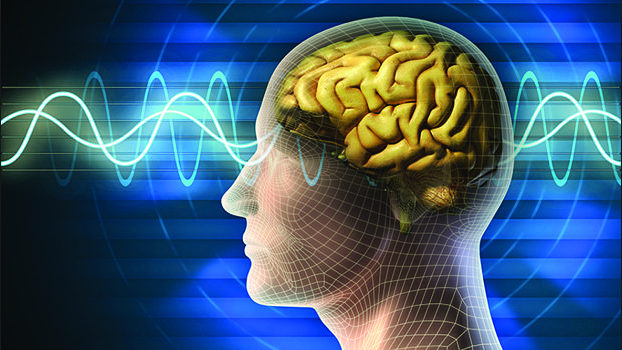
The entire debate here obscures a larger issue that is only now beginning to become apparent. Could it be, as Australian philosopher David Chalmers suggests, that our smart devices have advanced so much and our dependency on them has grown so much that these bits of technology are really a part of our minds?
If you are like me, there is no longer a need to clutter your mind with data like phone numbers or directions. This part of our memory has now been relegated to our perpetually attached mobile computing device. We have become dependent on these resources as true extensions of our minds. And that dependence (theoretically, at least) has freed our minds to pursue other, more worthy tasks.
In case you are thinking that this is some kind of esoteric philosophical conjecture, consider the implications as our technology only continues to embed itself into our lives and minds. We will trust more and more of our most personal information to our portable brain extension devices (aka iPhones.) Already our diaries and details of our finances are entrusted. Soon too, our medical histories and even current metabolic statuses will be faithfully monitored 24/7 by our new pre-prefrontal lobes.
If these mind extensions are not absolutely and unequivocally securely encrypted then the risk of having everything we think, everything we do, and in fact everything we ARE laid open represents an entirely new kind of threat to our individual privacy and liberty.
You can read in their recent stance, that Apple understands that undermining confidence in security and encryption represents probably the greatest existential threat. Not only to Apple as a company, but also to our advancement as a species.
Imagine a futuristic scenario where government scientists have finally been able to decrypt the human mind, reading memories as if they were collections of short stories. Under what circumstances could or should the government compel you to subject yourself to a mandatory download of your thoughts and memories? Today, this is the stuff of science fiction. We, in the US have explicit protections in the fifth amendment that shield us from testifying against ourselves. And we are a million miles from reading our wetware as we read the ones and zeros of a computer’s memory.
But what if my iPhone is really an extension of my mind. Do my constitutional protections extend with them? Should they?
The US Government argues that the correct analogy here is that an iPhone is like a safe deposit box. And that with the proper warrant and probable cause it should be able to access the contents of that box. But which is it really more like? If my iPhone is constantly recording my movements, my communications and even my thoughts, would the government not be compelling me to testify against myself?
We as a society must come to terms with these complex issues through our courts and legislative processes. We are already behind. Personally, i am anything but optimistic that reason and a respect for constitutional rights will prevail in this fear infused environment. I’ll ask Siri what she thinks.
 Random Tinkering